Nature is Bursting with Miracles.
Nathan wanted me to emphasize how important it is to get children out in nature to explore and witness its abundant array of miracles.
Notice the clouds in the sky, how the birds fly, the insects on the ground and in the air, and how each plant grows so seamlessly — from one blade of grass to the giant towering trees that provide shade and beauty. It’s all truly magnificent!
How Flowers Grow is a Miracle.
Observe a flower and all its delicate intricacy — the vibrant colors, the shape of each petal, the stem and its texture. Did you know there are close to 400,000 different varieties of flowers, and scientists discover new ones each year?
How Trees Grow is a Miracle.
Observe a tree and all its captivating beauty — the trunk, the roots, the limbs, the branches, and the incalculable number of leaves. There are currently about 73,000 different varieties of trees, and scientists estimate that around 9,000 varieties have yet to be discovered.
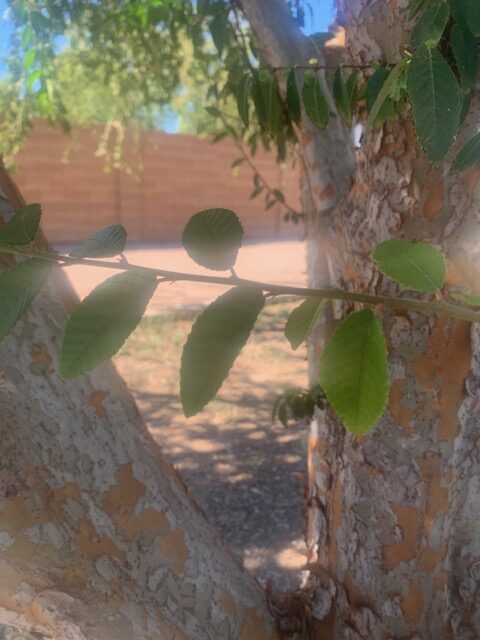
If you look closely, you’ll see that leaves have veins in them. This is known as the venation system, a vascular network that transports water, minerals, and sugars while providing structural support.
Humans are Like Trees.
You’ll notice that humans also have a trunk, roots, limbs, and branches. The human trunk is the torso; our roots consist of our parents, grandparents, and ancestors; our limbs contain four parts consisting of our two legs and two arms; and our branches include the circulatory system, the nervous system, and the respiratory system. In fact, humans and trees share deep physical, biological, and cultural parallels that connect us across science, history, and tradition.
The Word “Leaves” is a Homonym.
What’s the first thing you think of when you hear the word “leaves?” Is it the verb tense, such as a person who departs a place, or is it the noun meaning leaves on a tree?
Find Different Types of Leaves.
Let’s explore the different types of leaves on a tree, a bush, and a flower!
I’ll start. These are from my backyard.
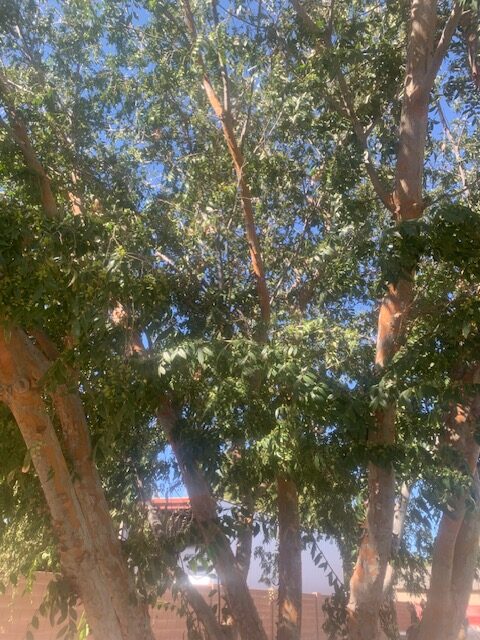
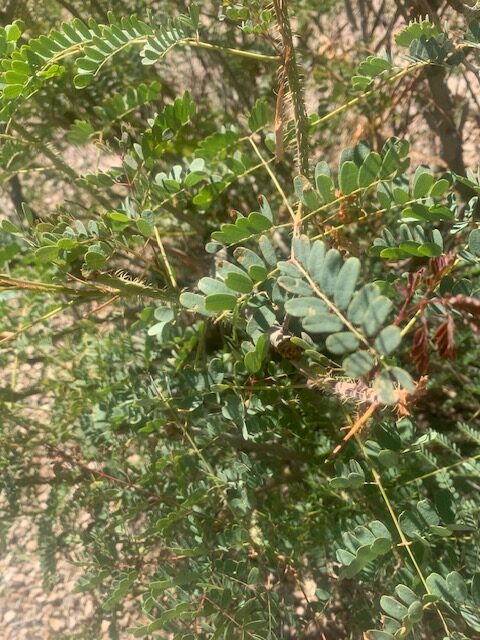
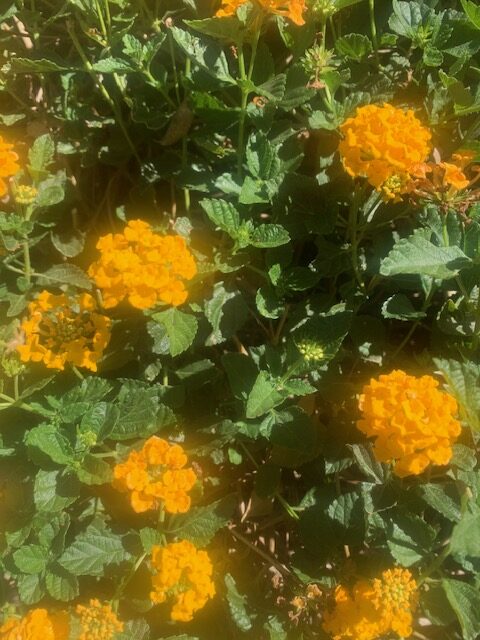
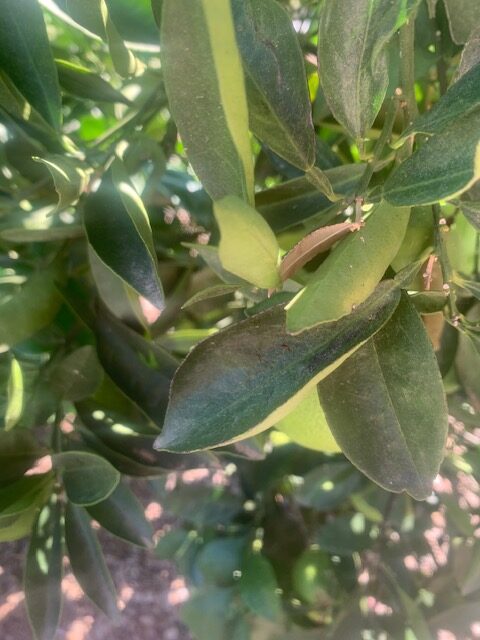
The first and second photos depict leaves on an elm tree. The third photo depicts leaves on a Bird of Paradise bush. The fourth photo depicts leaves on a lantana bush with golden yellow flowers. The fifth photo depicts leaves on a dwarf navel orange tree.
Look around your own backyard or go for a walk and see how many different types of leaves you can find. Notice if they have a venation system!