Alphabet Anatomy

Author name: Linda

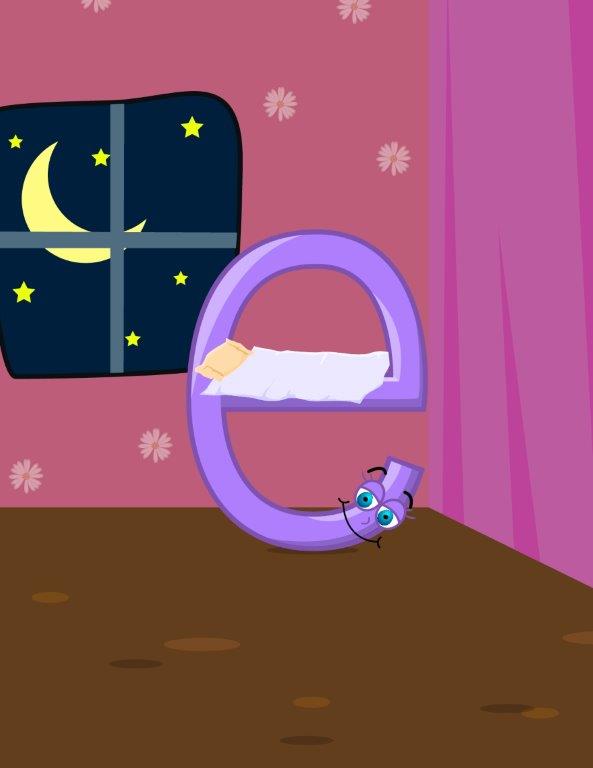
Purple letter 'E' with a smiling face, lying on the floor next to a bed with a window showing the moon.
Blog

How Alphabet Anatomy Enhances Preschool Education

Preschool education is a crucial stage in a child’s development. During these formative years, children begin to develop essential skills, such as language, motor abilities, and social interactions. One of the most important milestones in early education is learning the alphabet, a fundamental step toward literacy. Traditional methods of teaching letters, while effective, can often feel monotonous to young learners. This is where Alphabet Anatomy steps in, offering a fun, engaging, and interactive approach that makes the learning process both enjoyable and effective.  Engagement Through Fun and Creativity  Young children thrive in environments that are engaging, playful, and full of creativity. The Alphabet Anatomy method incorporates colorful, lively illustrations and playful imagery to capture a child’s attention, making learning an enjoyable experience. Instead of simply learning about letters in isolation, children are introduced to letters alongside characters, animals, or objects that begin with that letter. For example, the letter “A” might be paired with an apple, while “B” could feature a bear. These visual representations not only help children remember the letters more easily but also build connections between letters and real-world concepts.  This playful approach fosters excitement and curiosity in children, encouraging them to explore the alphabet at their own pace. By engaging their imagination and senses, Alphabet Anatomy helps preschoolers form positive associations with learning, making them more eager to pick up their next book or educational activity.  Building Stronger Connections Through Visual Learning  Preschoolers are naturally visual learners. Their brains are wired to absorb and process images more easily than abstract concepts, which makes visual learning an ideal method for teaching young children. Alphabet Anatomy leverages this by pairing each letter with a distinct visual representation, turning abstract symbols into something tangible and relatable. This technique enhances memory retention because it taps into the brain’s ability to store and recall visual information more effectively.  By combining letters with pictures of objects or animals, Alphabet Anatomy creates a bridge between letters and the world around the child. This visual connection reinforces learning, as the child can more easily associate the shape and sound of the letter with an image they recognize. For example, associating the letter “D” with a dog or the letter “C” with a cat allows children to see real-world examples of what those letters represent, making the learning process more meaningful and easier to remember.  Interactive Learning for Active Participation  One of the most powerful aspects of Alphabet Anatomy is its interactive nature. Rather than simply being a book that a child looks at, Alphabet Anatomy encourages hands-on learning through activities that engage multiple senses. Children are encouraged to trace the letters, color the illustrations, and even participate in interactive storytelling based on the letters they are learning. This active participation not only reinforces the child’s understanding of the alphabet but also helps them develop fine motor skills, such as hand-eye coordination and pencil control.  Moreover, the hands-on approach fosters a deeper understanding of each letter. When children physically engage with the material by tracing or drawing letters, they not only learn the shapes of the letters but also begin to understand the mechanics of writing. This multi-sensory approach strengthens the child’s ability to recall letters, sounds, and their meanings, providing a well-rounded foundation for literacy.  Supporting Early Literacy Development  Learning the alphabet is the first step toward mastering reading and writing, which are essential skills for academic success. Alphabet Anatomy not only focuses on letter recognition but also introduces children to phonemic awareness the ability to recognize and manipulate sounds in spoken words. By associating each letter with a corresponding sound, children start to build a solid understanding of how letters and sounds work together. This foundational knowledge will be critical when they move on to reading words and sentences.  The interactive nature of Alphabet Anatomy also encourages children to experiment with language, which is vital for early literacy development. As they explore the alphabet through fun and engaging activities, they are laying the groundwork for a future filled with reading and writing success.  Encouraging a Love for Learning  Perhaps one of the most significant benefits of Alphabet Anatomy is that it helps foster a love for learning in young children. By turning the alphabet into a playful, interactive experience, Alphabet Anatomy makes learning feel less like a chore and more like an exciting adventure. When children feel excited and curious about what they are learning, they are more likely to continue seeking knowledge in other areas. This early positive experience with learning helps instill a lifelong love for education.  In conclusion, Alphabet Anatomy is an invaluable tool for enhancing preschool education. Through its fun, creative, and interactive approach, it transforms the process of learning the alphabet into an engaging and enjoyable experience for young children. By building stronger connections through visual learning, encouraging active participation, and supporting early literacy development, Alphabet Anatomy sets the stage for a successful academic journey and a love of learning that will last a lifetime. 
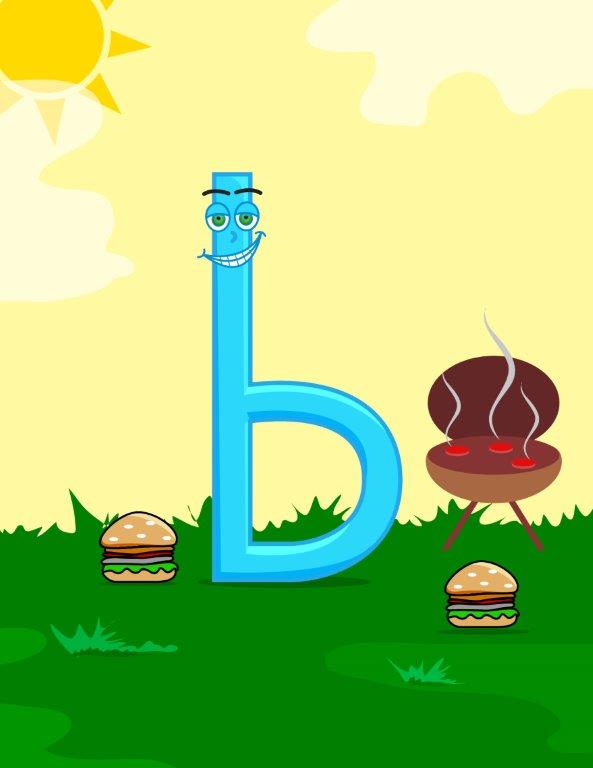
Blue letter 'B' with a burger and a grill, placed in a grassy area.
Blog

The Power of Visual Learning: How Alphabet Anatomy Transforms Early Education

In the fast-paced world of early childhood education, teachers and parents are constantly looking for innovative ways to engage young learners. One such method that has proven to be highly effective is visual learning, particularly when it comes to teaching the alphabet. Alphabet Anatomy is a groundbreaking approach that harnesses the power of visuals to help children connect with letters in a fun and engaging way. This method not only makes learning enjoyable but also accelerates the understanding of foundational concepts for young minds.  What is Visual Learning?  Visual learning is a teaching strategy that uses images, symbols, and other visual elements to support the retention and understanding of information. This approach has been shown to be especially effective for young children, whose brains are still in the process of developing the skills needed to process and understand abstract concepts. Instead of relying solely on auditory or textual information, visual learning integrates images and shapes to make the learning experience more tangible and memorable.  Why Visual Learning Works for Teaching the Alphabet  When it comes to teaching children the alphabet, the traditional approach often involves rote memorization. While this can work for some, many children struggle to retain abstract concepts such as letter names and shapes. Visual learning, on the other hand, taps into a child’s innate ability to recognize patterns and images. When children associate each letter with a visual representation, such as a character or object that starts with that letter, they can make a much stronger connection.  For example, in Alphabet Anatomy, each letter is presented alongside an illustration that helps children see and understand the letter’s shape. This visual cue reinforces the letter’s identity in a way that simple text or audio cannot. When a child sees the letter “A” paired with an image of an apple, they not only learn the letter’s name but also begin to associate it with a word and a real-world object. This multi-sensory approach visual, auditory, and even kinesthetic creates a deeper and more lasting connection.  Engagement Through Fun and Creativity  Another benefit of using visuals in teaching the alphabet is the increased engagement it offers. Children are naturally curious, and they are more likely to stay focused on a task that stimulates their imagination. Alphabet Anatomy incorporates fun and colorful illustrations that turn each letter into an adventure. Whether it’s the letter “B” represented by a playful bear or the letter “C” paired with a cheerful cat, these images spark a child’s interest and encourage them to interact with the material.  The bright and vibrant visuals also help maintain a child’s attention. Young children have shorter attention spans, so making learning visually stimulating is key to keeping them engaged. By turning learning into an interactive experience, Alphabet Anatomy ensures that children stay focused and excited about learning the alphabet.  Enhancing Memory Retention  Studies show that people are much more likely to remember information when it is paired with a visual element. This is known as the “picture superiority effect.” When children see an image associated with a letter, it strengthens the neural connections that help them remember the letter. Over time, this repetition of visual cues helps children recall letters faster and with greater accuracy.  In Alphabet Anatomy, this is reinforced through repetition and variation. Each letter is presented with different images, words, and activities, which ensures that children encounter the alphabet in multiple contexts. The more frequently a child sees and interacts with the visual elements of the alphabet, the more likely they are to internalize the information and recall it when needed.  A Step Towards Early Literacy Success  The benefits of using visual learning to teach the alphabet extend far beyond just recognizing letters. Alphabet Anatomy helps children build a solid foundation for early literacy skills, such as phonemic awareness, word recognition, and even handwriting. By introducing these concepts in a fun and visually engaging way, children are better prepared for future learning, setting them up for academic success.  In conclusion, the power of visual learning in early education cannot be overstated. Alphabet Anatomy uses engaging illustrations and visual cues to help children connect with the alphabet in a way that is both educational and enjoyable. By leveraging the power of visuals, Alphabet Anatomy transforms the learning experience, making it easier for children to understand, remember, and apply the alphabet in their everyday lives. This approach not only enhances memory retention but also fosters a love for learning that will last a lifetime. 

Alphabet Anatomy letter C illustration with Cat
Blog

Defining Alphabet Anatomy

What do you think of when you hear the phrase, “Alphabet Anatomy?” Of course it pertains to the alphabet, but let me explain a little further. Alphabet Anatomy literally examines, depicts, and describes the structure of each alphabet letter, thus its “anatomy.” Learning to name and associate the alphabet letters with their accompanying shapes and sounds is a difficult task because the letter symbols are inherently abstract and few of them make their initial primary sound when recited (namely: B, D, J, K, P, T, V, Z). The vowels (A, E, I, O, U) are even more complex since reciting their names reflects only their long sounds versus their short sounds. Alphabet Anatomy helps to ease this difficult task by introducing a fun, simple rhyme and illustration for each capital and lower-case letter that can be easily memorized and recalled to facilitate important alphabet knowledge and letter recognition skills and aide in teaching both reading and handwriting. Extensive research has continued to prove that children learn best through play. Utilizing Alphabet Anatomy’s rhymes is a playful way to engage children and, at the same time, plant the critical early literacy seeds necessary for a full understanding of the alphabet. That “full understanding” includes all four components of each letter: Letter shape knowledge Letter name knowledge Letter sound knowledge Letter writing ability   Only when children have mastered the alphabet will they be inclined and able to attain the ultimate goal of reading proficiency. Together, Alphabet Anatomy’s rhymes and illustrations present visual and auditory pictures that vividly describe the distinctive features of each letter. So, the objective is to diminish the inherent barrier of associating the letter symbols with their shapes and sounds, vastly increasing comprehension and facilitating easy recall. The key word presented at the end of each rhyme further reinforces each letter’s primary sound so children understand the dynamic between speech sound and letters. P is for PPP-Pizza! And, of course, letter R wants you to Remember to Read with your child for at least 15 minutes everyday!  

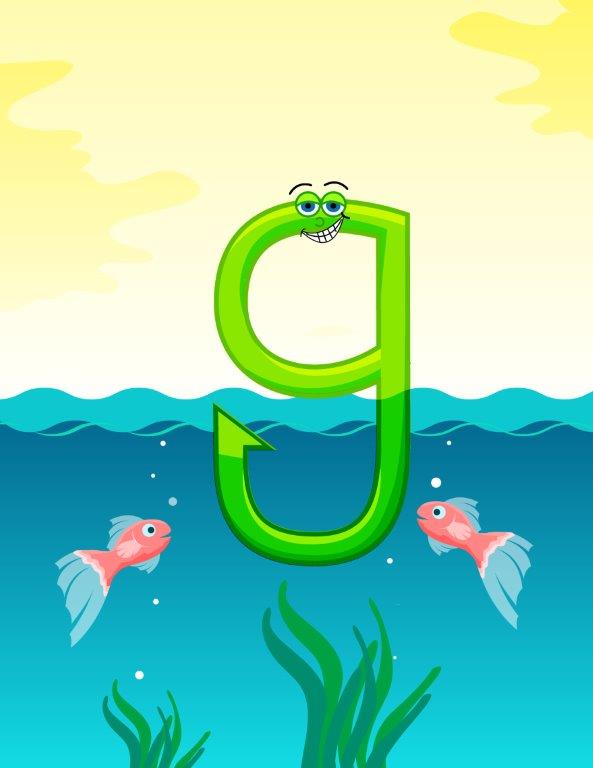
Green letter 'G' with a smiling face, surrounded by fish and underwater plants.
Blog

The Essence of True Character

I was going through my Word documents a few days ago and came upon this exceptionally beautiful writing by Ralph Waldo Emerson about character that I must have copied some time ago. I think it’s so worth sharing, especially in these times when the world seems to be experiencing such division and unrest on a multitude of varied topics and ideals. Of all the attributes we can help to instill in our kids, character is surely at the top of the list. The following words are wise and deep, for character is not a trait that is easily defined in a few brief words or a mere sentence or two. But, Mr. Emerson has done a fabulous job of examining character in action and exploring its many elusive facets. I hope you enjoy reading this as much as I did. “Persons with character are as easy to spot as if they were a different color. Self-trust and the perception that virtue is enough is the essence of character. It is the natural tendency to defy falseness and wrong. It speaks the truth, and it is just, generous, hospitable, temperate, despises pettiness, and is scornful of being scorned. Character persists when the mood has passed in which the decision to act was made. Character displays undaunted boldness and a fortitude that does not wear down or out. “When the soul is not master of one’s reactions to the world, then that soul is everyone’s dupe. The person of character is not for sale. He does not ask to dine nicely and to sleep warm. He does not need plenty; he can lose with grace. Character is persistent. The person of character makes a choice based on honorable considerations and sticks with it and, no matter what, does not weakly try to reconcile itself with the world. “The person of character knows that he is born into a state of war and his own well-being requires that he should not go dancing for peace. Knowing this, he collects himself and neither defying nor dreading the thunder, he takes both his reputation and his own life in his hand, and, with perfect calm and politeness, dares the hangman and the mob by the absolute truth of his speech, and the correctness of his behavior. Toward all external evil, the person of character affirms his ability to cope single-handedly with an infinite army of enemies. To this military attitude of the soul we give the name of heroism. “No change of circumstances can repair a defect of character. The heroic character does not accept the conventional opinions and practices. He is a nonconformist. Acquiescence to the establishment indicates lack of character which must see the house built before they can comprehend the plan. “There is a class of individuals which are endowed with character, heroism, insight and virtue. They are usually received with ill-will by the masses. No one can use common beliefs to understand these characters. They cannot be judged from glimpses. They need perspective, as a landscape. You cannot understand them by popular ethics nor by simple observation of their actions. It is said that he who confronts the gods knows heaven. This is the nature of the person of character. “The heroic character is a person of truth, master of his own actions, and expresses that mastery in his behavior, not in any manner dependent and servile either on persons, or opinions, or possessions. “People of character are an energetic class, full of courage and of attempts which intimidate their paler brethren. Being up to the demands of their very nature, they can out pray saints, out general veterans and outshine all courtesy. They are comfortable with pirates and scholars. “Times of heroism are generally times of terror, but the day never dawns in which this element is without value. Latent inner power is what we call Character, a reserved force which acts directly by presence, and without means. It is conceived of as a certain indemonstrable force, a Familiar of Genius, by whose impulses the hero is guided, but whose counsels he cannot impart. Character is of a stellar and indiminishable greatness.” — Ralph Waldo Emerson    

Scroll to Top