Alphabet Anatomy

Author name: Linda

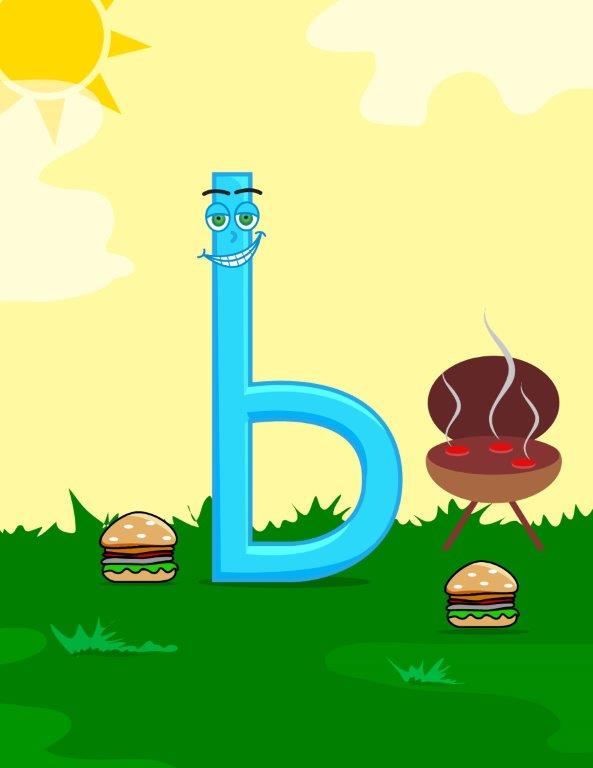
Blue letter 'B' with a burger and a grill, placed in a grassy area.
Blog

The Power of Visual Learning: How Alphabet Anatomy Transforms Early Education

In the fast-paced world of early childhood education, teachers and parents are constantly looking for innovative ways to engage young learners. One such method that has proven to be highly effective is visual learning, particularly when it comes to teaching the alphabet. Alphabet Anatomy is a groundbreaking approach that harnesses the power of visuals to help children connect with letters in a fun and engaging way. This method not only makes learning enjoyable but also accelerates the understanding of foundational concepts for young minds.  What is Visual Learning?  Visual learning is a teaching strategy that uses images, symbols, and other visual elements to support the retention and understanding of information. This approach has been shown to be especially effective for young children, whose brains are still in the process of developing the skills needed to process and understand abstract concepts. Instead of relying solely on auditory or textual information, visual learning integrates images and shapes to make the learning experience more tangible and memorable.  Why Visual Learning Works for Teaching the Alphabet  When it comes to teaching children the alphabet, the traditional approach often involves rote memorization. While this can work for some, many children struggle to retain abstract concepts such as letter names and shapes. Visual learning, on the other hand, taps into a child’s innate ability to recognize patterns and images. When children associate each letter with a visual representation, such as a character or object that starts with that letter, they can make a much stronger connection.  For example, in Alphabet Anatomy, each letter is presented alongside an illustration that helps children see and understand the letter’s shape. This visual cue reinforces the letter’s identity in a way that simple text or audio cannot. When a child sees the letter “A” paired with an image of an apple, they not only learn the letter’s name but also begin to associate it with a word and a real-world object. This multi-sensory approach visual, auditory, and even kinesthetic creates a deeper and more lasting connection.  Engagement Through Fun and Creativity  Another benefit of using visuals in teaching the alphabet is the increased engagement it offers. Children are naturally curious, and they are more likely to stay focused on a task that stimulates their imagination. Alphabet Anatomy incorporates fun and colorful illustrations that turn each letter into an adventure. Whether it’s the letter “B” represented by a playful bear or the letter “C” paired with a cheerful cat, these images spark a child’s interest and encourage them to interact with the material.  The bright and vibrant visuals also help maintain a child’s attention. Young children have shorter attention spans, so making learning visually stimulating is key to keeping them engaged. By turning learning into an interactive experience, Alphabet Anatomy ensures that children stay focused and excited about learning the alphabet.  Enhancing Memory Retention  Studies show that people are much more likely to remember information when it is paired with a visual element. This is known as the “picture superiority effect.” When children see an image associated with a letter, it strengthens the neural connections that help them remember the letter. Over time, this repetition of visual cues helps children recall letters faster and with greater accuracy.  In Alphabet Anatomy, this is reinforced through repetition and variation. Each letter is presented with different images, words, and activities, which ensures that children encounter the alphabet in multiple contexts. The more frequently a child sees and interacts with the visual elements of the alphabet, the more likely they are to internalize the information and recall it when needed.  A Step Towards Early Literacy Success  The benefits of using visual learning to teach the alphabet extend far beyond just recognizing letters. Alphabet Anatomy helps children build a solid foundation for early literacy skills, such as phonemic awareness, word recognition, and even handwriting. By introducing these concepts in a fun and visually engaging way, children are better prepared for future learning, setting them up for academic success.  In conclusion, the power of visual learning in early education cannot be overstated. Alphabet Anatomy uses engaging illustrations and visual cues to help children connect with the alphabet in a way that is both educational and enjoyable. By leveraging the power of visuals, Alphabet Anatomy transforms the learning experience, making it easier for children to understand, remember, and apply the alphabet in their everyday lives. This approach not only enhances memory retention but also fosters a love for learning that will last a lifetime. 

Alphabet Anatomy letter C illustration with Cat
Blog

Defining Alphabet Anatomy

What do you think of when you hear the phrase, “Alphabet Anatomy?” Of course it pertains to the alphabet, but let me explain a little further. Alphabet Anatomy literally examines, depicts, and describes the structure of each alphabet letter, thus its “anatomy.” Learning to name and associate the alphabet letters with their accompanying shapes and sounds is a difficult task because the letter symbols are inherently abstract and few of them make their initial primary sound when recited (namely: B, D, J, K, P, T, V, Z). The vowels (A, E, I, O, U) are even more complex since reciting their names reflects only their long sounds versus their short sounds. Alphabet Anatomy helps to ease this difficult task by introducing a fun, simple rhyme and illustration for each capital and lower-case letter that can be easily memorized and recalled to facilitate important alphabet knowledge and letter recognition skills and aide in teaching both reading and handwriting. Extensive research has continued to prove that children learn best through play. Utilizing Alphabet Anatomy’s rhymes is a playful way to engage children and, at the same time, plant the critical early literacy seeds necessary for a full understanding of the alphabet. That “full understanding” includes all four components of each letter: Letter shape knowledge Letter name knowledge Letter sound knowledge Letter writing ability   Only when children have mastered the alphabet will they be inclined and able to attain the ultimate goal of reading proficiency. Together, Alphabet Anatomy’s rhymes and illustrations present visual and auditory pictures that vividly describe the distinctive features of each letter. So, the objective is to diminish the inherent barrier of associating the letter symbols with their shapes and sounds, vastly increasing comprehension and facilitating easy recall. The key word presented at the end of each rhyme further reinforces each letter’s primary sound so children understand the dynamic between speech sound and letters. P is for PPP-Pizza! And, of course, letter R wants you to Remember to Read with your child for at least 15 minutes everyday!  

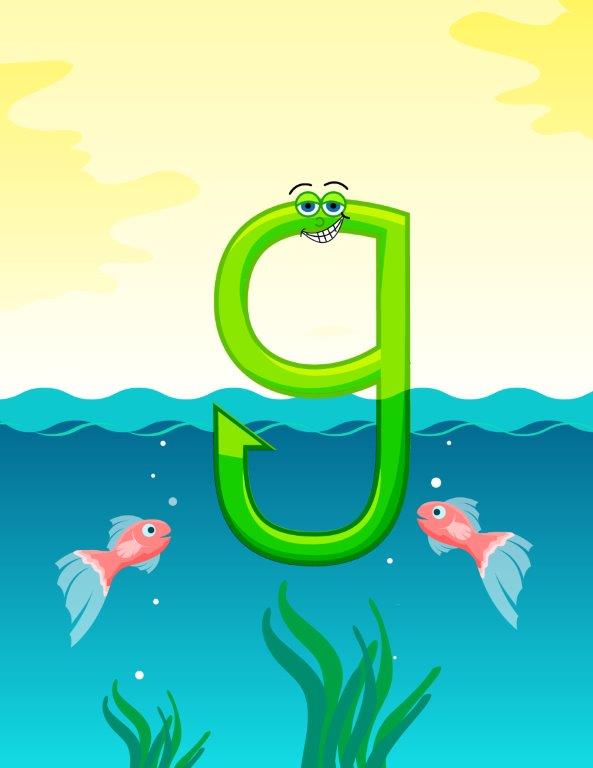
Green letter 'G' with a smiling face, surrounded by fish and underwater plants.
Blog

The Essence of True Character

I was going through my Word documents a few days ago and came upon this exceptionally beautiful writing by Ralph Waldo Emerson about character that I must have copied some time ago. I think it’s so worth sharing, especially in these times when the world seems to be experiencing such division and unrest on a multitude of varied topics and ideals. Of all the attributes we can help to instill in our kids, character is surely at the top of the list. The following words are wise and deep, for character is not a trait that is easily defined in a few brief words or a mere sentence or two. But, Mr. Emerson has done a fabulous job of examining character in action and exploring its many elusive facets. I hope you enjoy reading this as much as I did. “Persons with character are as easy to spot as if they were a different color. Self-trust and the perception that virtue is enough is the essence of character. It is the natural tendency to defy falseness and wrong. It speaks the truth, and it is just, generous, hospitable, temperate, despises pettiness, and is scornful of being scorned. Character persists when the mood has passed in which the decision to act was made. Character displays undaunted boldness and a fortitude that does not wear down or out. “When the soul is not master of one’s reactions to the world, then that soul is everyone’s dupe. The person of character is not for sale. He does not ask to dine nicely and to sleep warm. He does not need plenty; he can lose with grace. Character is persistent. The person of character makes a choice based on honorable considerations and sticks with it and, no matter what, does not weakly try to reconcile itself with the world. “The person of character knows that he is born into a state of war and his own well-being requires that he should not go dancing for peace. Knowing this, he collects himself and neither defying nor dreading the thunder, he takes both his reputation and his own life in his hand, and, with perfect calm and politeness, dares the hangman and the mob by the absolute truth of his speech, and the correctness of his behavior. Toward all external evil, the person of character affirms his ability to cope single-handedly with an infinite army of enemies. To this military attitude of the soul we give the name of heroism. “No change of circumstances can repair a defect of character. The heroic character does not accept the conventional opinions and practices. He is a nonconformist. Acquiescence to the establishment indicates lack of character which must see the house built before they can comprehend the plan. “There is a class of individuals which are endowed with character, heroism, insight and virtue. They are usually received with ill-will by the masses. No one can use common beliefs to understand these characters. They cannot be judged from glimpses. They need perspective, as a landscape. You cannot understand them by popular ethics nor by simple observation of their actions. It is said that he who confronts the gods knows heaven. This is the nature of the person of character. “The heroic character is a person of truth, master of his own actions, and expresses that mastery in his behavior, not in any manner dependent and servile either on persons, or opinions, or possessions. “People of character are an energetic class, full of courage and of attempts which intimidate their paler brethren. Being up to the demands of their very nature, they can out pray saints, out general veterans and outshine all courtesy. They are comfortable with pirates and scholars. “Times of heroism are generally times of terror, but the day never dawns in which this element is without value. Latent inner power is what we call Character, a reserved force which acts directly by presence, and without means. It is conceived of as a certain indemonstrable force, a Familiar of Genius, by whose impulses the hero is guided, but whose counsels he cannot impart. Character is of a stellar and indiminishable greatness.” — Ralph Waldo Emerson    

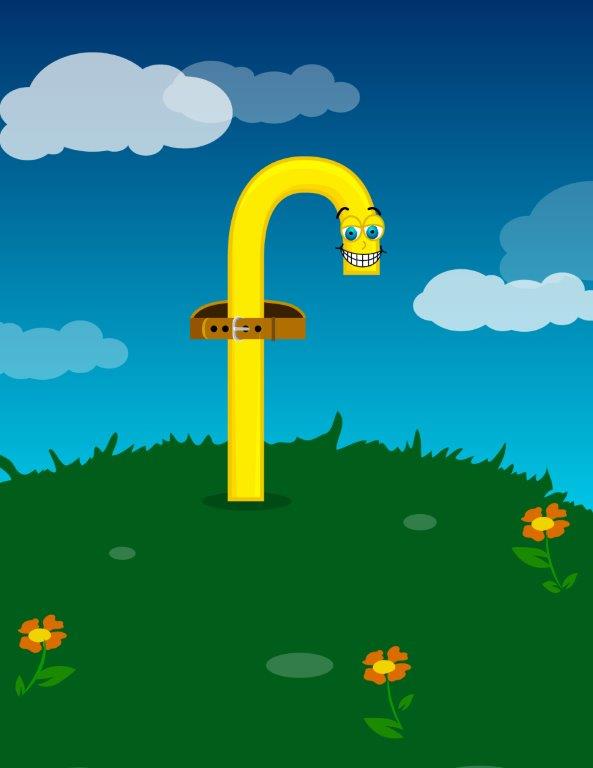
Yellow letter 'F' with a smiling skull and belt on top, standing on grassy ground with flowers.
Blog

Facilitating Alphabet Knowledge

Alphabet knowledge is defined as a child’s ability to recognize all the alphabet letters, preferably in both capital and lower case form, and to know the name, shape, sound, and print formation of each. Alphabet knowledge is THE BEST predictor of a child’s ability to become a proficient reader.     You may have also heard the term, Alphabetic Principle, which is simply the understanding that there are systematic and predictable relationships between written letters and spoken sounds. Parents everywhere are being encouraged to facilitate this vital early literacy strategy during their child’s preschool years. Equally important, however, is the manner in which this is accomplished. It still holds true that children learn best through play; and boring, repetitive drilling is never recommended.   There’s a reason that nursery rhymes are so popular to recite and sing to our precious little ones. Not only do they elicit happy, loving thoughts and feelings, their educational value serves to help babies and toddlers understand and learn about different sounds. Familiarizing children with nursery rhymes and other rhymes in books helps them learn how language words, and enables them to even anticipate rhyming words. Rhymes also teach children about the patterns and structure of spoken and written language.   So, is there an easy way to both expose your child to the multitude of benefits that rhymes provide and also facilitate alphabet knowledge? Why, yes there is! Alphabet Anatomy’s fun, simple rhymes are easily recited through playful interaction and provide children with knowledge about each letter’s name, sound, shape, and the necessary strokes for print formation once they are ready to practice writing the alphabet letters. Recitation of each rhyme serves as an amazing tool for visual and auditory recall of all letter components.   Meet capital letter A!     Meet lower case letter a!     Most children begin recognizing some letters between the ages of 2 and 3. They will most likely enjoy learning the letters of their name first, so don’t feel like you have to go in alphabetic order. But, what are you waiting for? Equipping your child with the vital skill of alphabet knowledge has never been easier! Facilitating a solid early literacy foundation is one of the best gifts you can give. And it will provide your child with a big head-start on that very critical and fundamental skill of proficient reading. In fact, their future depends on it!

Scroll to Top